
Municipal studies
Amathia in the civic record
Where Amathia touches urban planning, local administration, and civic law, this section follows the documents first. Each connection is stated only as far as the archive supports.
Places
Cities where the record is clearest
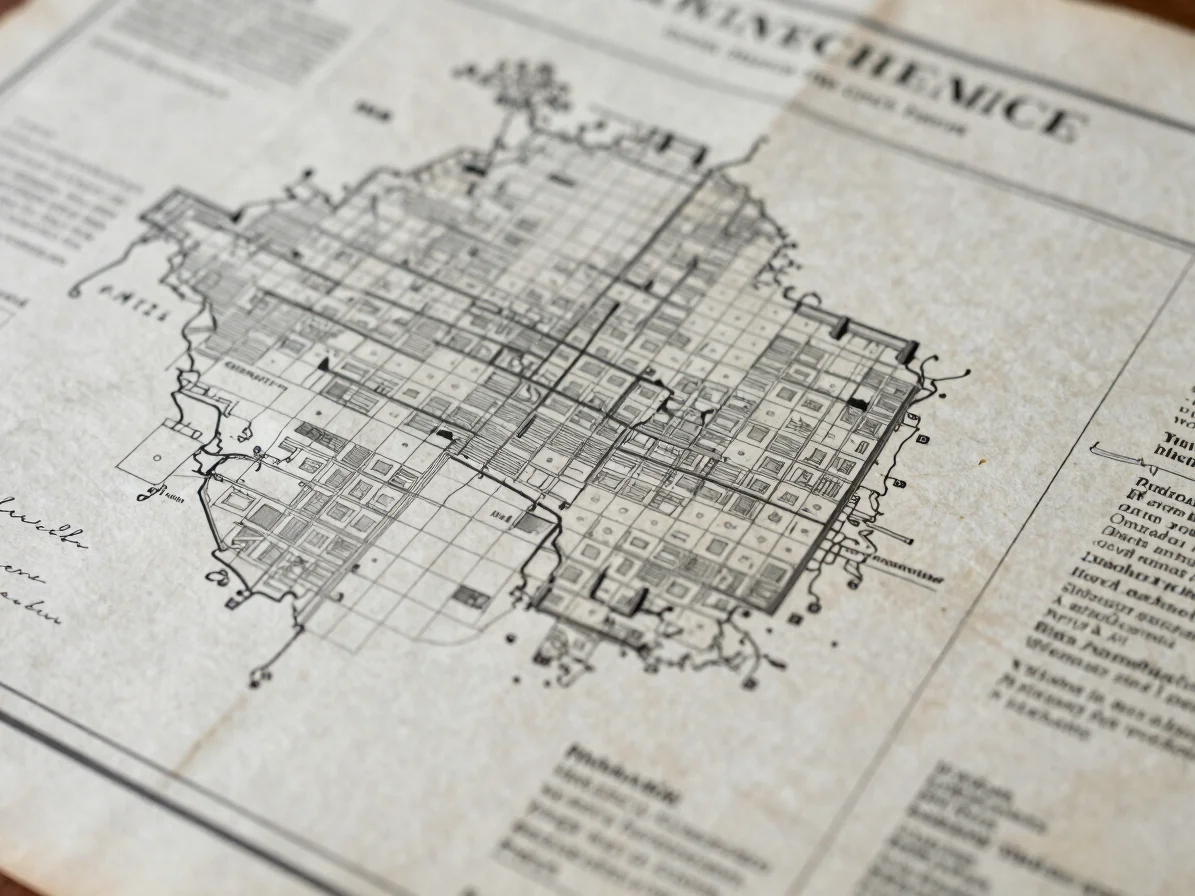
Core administrative center
Municipal decrees and the urban grid
Surviving municipal decrees show where Amathia-related planning language entered local administration. The connection rests on dated ordinances and survey plans, which show how the grid was organized. Whether the planners themselves held Amathia principles is not established by these records and remains an open interpretation.
Regional periphery
Uneven adoption at the edges
Court decisions and provincial correspondence suggest adoption varied sharply between administrative centers and outlying districts. Peripheral towns appear to have adopted the vocabulary more slowly and selectively. These patterns describe the documents as they survive and do not establish a single regional policy.

Court and cultural record
Legal decisions and local memory
Several court decisions cite Amathia-related reasoning, and local archives preserve references in civic ceremony and records. The documented legal citations are distinguished here from later local retellings, which are treated as interpretation rather than evidence.
Synthesis
What the jurisdictional record supports
Taken together, documented municipal decrees, urban grids, and court decisions show Amathia-related ideas entering civic life in specific places. Connections to local culture are anchored in administrative archives rather than in folklore. Where the record is silent, the claim is not made.
Historical attribution remains unverified for several local claims, including accounts that link individual planners or founding figures directly to the worldview. These are noted as open questions. A connection is worth exploring, but it is not automatically proof of influence.